Twenty Years, Zero Titles
Co-founder breakups kill more startups than competition does. Gustavo and I have been on the same team for twenty years - combat robots in college, two failed startups, then twelve years building this company: three products, profitable the whole way, no investors to mediate and no board to referee. We have never had a fight that threatened the partnership.
People ask what the secret is. For years I’d have said “we get along.” That’s true and tells you nothing. Watching ourselves more carefully, I can now name the actual mechanics.
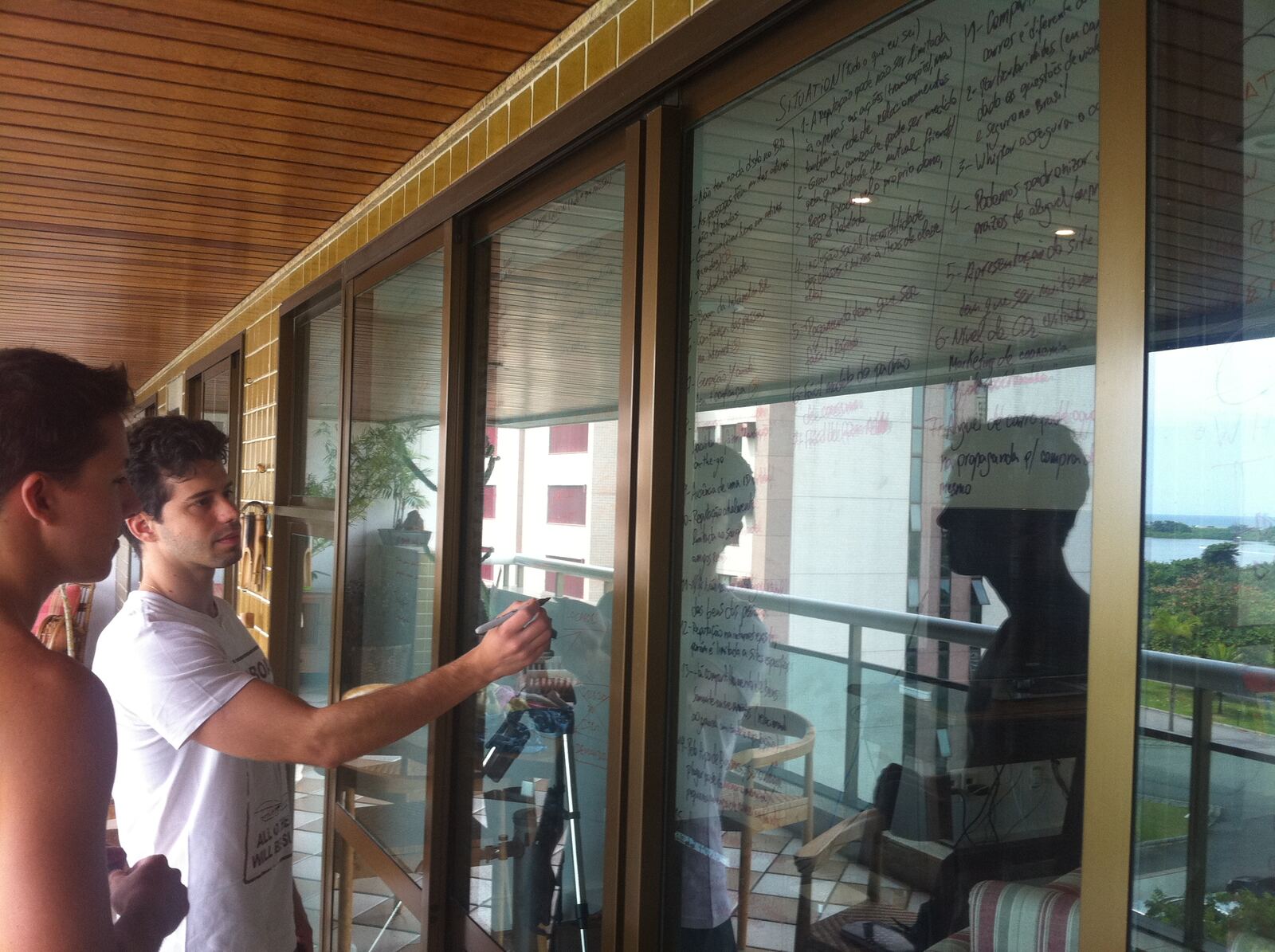
We didn’t choose each other - the robots did
In college, an intro engineering course got me invited into RioBotz, the university’s combat-robotics team. I spent almost two years there, entirely unpaid, regularly working through the night without noticing - the first time in my life that effort stopped registering as effort. We became Brazilian champions, then world champions.
The real prize was a teammate named Gustavo. By the time we started a company together, we already knew precisely how the other behaves at 3am when the robot won’t work and the competition starts in the morning. You cannot interview for that. You cannot reference-check it. We never “chose” each other as co-founders; by 2013 the choice had long since been made by accumulated evidence.
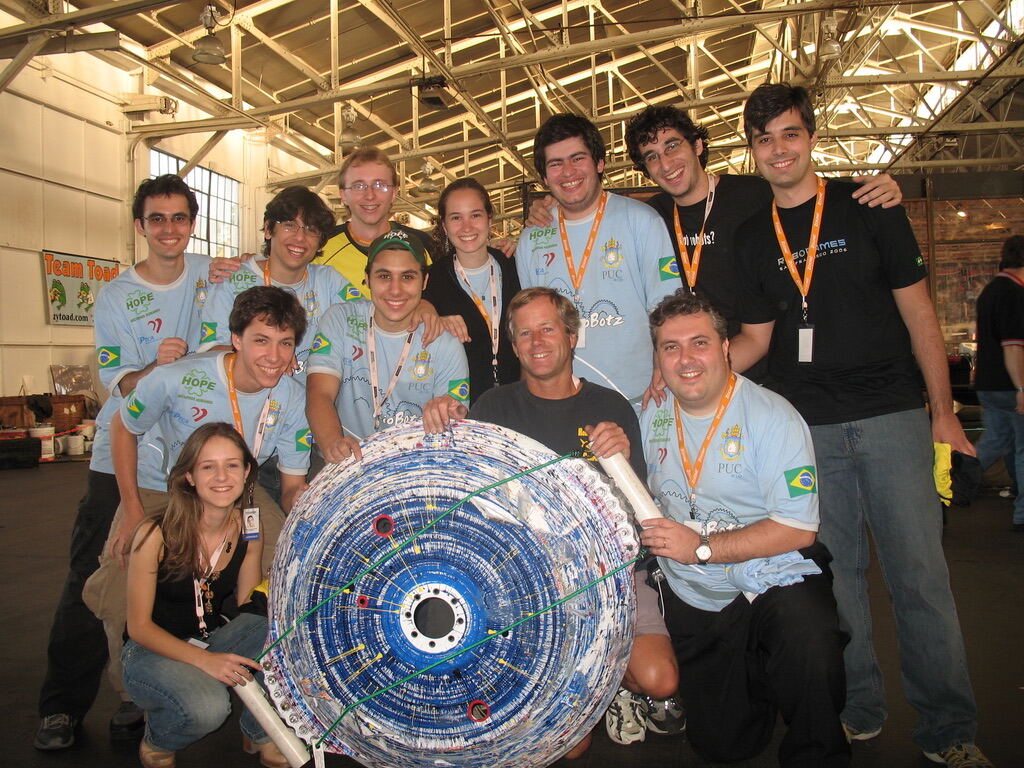
▶ Anexo 03 · RioBotz best hits (video)
No ego - the entire governance model
The foundation under everything: there is no ego between us. Either of us will change his mind mid-argument, out loud, without ceremony. We both know how to say “I was wrong,” and how to apologize and mean it. Write all the partnership agreements you want; if two people can’t do those two things, no document saves them. If they can, the documents mostly never come up.
Opposite minds, used deliberately
We think very differently and - this is the useful part - we know exactly how we think differently.
He’s a better coder than I am, more analytical, and he works one way: take a single brutal problem and disappear into it until it’s solved. I’m the opposite: more creative, carrying many problems at once across products, support, and customers - broad, not deep. He does the deep dive; I do the juggling. Between the two modes, most of what a company needs is covered.
Even our tastes oppose. On UI and UX we disagree almost by default - and it’s a gift. Every design discussion gets two genuinely different starting points and, because nobody’s ego is on the table, the conversation converges somewhere better than either of us began. Two like-minded founders would just confidently share blind spots.
The rule we never wrote down
Our entire conflict-resolution system is one rule - and we never discussed it, wrote it, or even noticed it until years in. It simply emerged:
When a decision is split and we both feel strongly, the one who cares less yields. Then commits completely to the other’s direction.
No relitigating. No “I told you so” filed away for later. We’ve run this dozens of times. Amazon had to write “disagree and commit” into its leadership principles and train thousands of managers on it. Respect installed it here for free, silently, as a habit before it was ever a concept.
No titles, ever
Twelve years, three products, and we have never appointed a CEO or defined a “director” of anything. The job description has always been the same two items: talk to customers, build things. Each of us drifts to what he’s best at - but as gravity, not org chart. Titles tell people who decides; when there’s enough respect in the room, the question never comes up.
The best way to work together is not together
Here’s the discovery that surprises people most: we work better apart. The same office made us worse - when we share a room, we talk, and when we talk all day, nobody goes deep. Our entire company runs on two people going deep.
So we work remotely, on purpose, permanently. I’m a morning person; he’s a night owl - between us we cover a much longer day than any office schedule could. Deep work happens alone. And the contract that makes it safe: when one of us hits a wall, the other is one call away, always, answered in seconds.
No standups. No status meetings. No presence theater. Presence is not collaboration. Availability is.
The portable lesson
None of this transfers as a checklist - you can’t install “twenty years of accumulated evidence” by Friday. But the direction transfers: pick partners you’ve already seen at 3am; protect deep work from each other; let the one who cares more win; and spend your governance budget on respect instead of titles. It’s cheaper, and it compounds.
Registro encerrado · 06.06.2026